Suffering - Loving - Praying - Serving - Rejoicing

1 Peter 4

Today's chapter didn't have one particular verse that popped out at me. Instead, I found the entire chapter a strange mix of admonitions, encouragements, warnings, and instructions. The major theme seems to be that of suffering. In fact, Peter seems to suggest that our suffering on this earth (as Christians) is a reflection of our salvation. It is proof of the reality of Christ's death and resurrection. We don't have to live a life controlled by sin. We can say no. We can yes to the will of God. Yet we still struggle with the reality of sin in our lives. We may even suffer as a result of its constant onslaught. But that is the life in this flesh. We suffer because we are believers – from the effects of sin and as a result of persecution for our faith. The truth is, most of us in American suffer more from our battle with sin than being persecuted for our faith. But we suffer none-the-less. So Peter tells us…

Dear friends, do not be surprised at the painful trial you are suffering, as though something strange were happening to you. - Vs 12

We are sharing in Christ's sufferings. We are going through the same thing He went through. So what are we supposed to do? Peter lays it out for us. He says we are to pray (Vs 7). He tells us to love one another (Vs 8), to show hospitality to one another (Vs 9), to use our spiritual gifts to serve one another (Vs 10), and to keep on rejoicing (Vs 13). And finally he tells us to see our suffering as part of the will of God and to trust the outcome, the salvation of their souls, to the faithfulness of God.

So then let those who suffer according to the will of God entrust their souls to a faithful Creator as they do good. - Vs 19

So no matter how bad it may seem, we are to do good. No matter how difficult the circumstances may appear, we are to rejoice in them. We are to love one another, serve one another, and open our hearts and homes to one another.  We are to communicate to one another the words of God and serve one another in the strength of God (Vs 11). So that God is glorified through our lives as we live them out on this earth.

Father, I admit that I am still somewhat surprised by the trials that I encounter on this earth. I guess I still kind of expect life to be a little bit easier on me because I am Yours. I don't want to have to struggle with sin. I don't want to have to suffer for my faith. Yet You tell me to expect it and to rejoice in it. Show me how to do that more effectively. I know I try to do it in my own strength and I fail. So help me do it in Your strength. So that I may speak Your words and serve in your power. And so that You can be glorified on this earth in my life.  Amen

Living In Harmony.

1 Peter 3

Finally, all of you, live in harmony with one another; be sympathetic, love as brothers, be compassionate and humble. Do not repay evil with evil or insult with insult, but with blessing, because to this you were called so that you may inherit a blessing. – Vs 8-9

What if we actually did this? What if husbands and wives really did live these verses out in their marriages? What if members of the body of Christ were able to illustrate these truths in their lives together?

Can you imagine the impact we would have on the world around us? Everything Peter lists here is simply the outcome of a life lived in the Spirit. We can't manufacture it or muster it up in our own strength. At least, not for long. Yet because we are new creations with the Spirit of God living within us, we have the capacity to do all of these things. We really can live in harmony with one another, in our marriages, homes, and church. Which means we can be of "one mind," having a common focus, a single purpose for our lives. We can and should sympathize with one another, showing compassion and a mutual understanding of what the other person is going through. Think about that one. If we see a brother or sister, or a husband or wife struggling with sin or stumbling in their walk, we tend to look down our nose at them. We even criticize them, or worse yet, we avoid them. Instead we should have the attitude, "but for the grace of God go I." To sympathize with them is to feel their feelings, to understand their pain, and to express that understanding in love and compassion, not judgment. That's what it means to "love as brothers," compassionately and humbly, not mercilessly and pridefully.

We really can extend blessing to one another instead of getting back or getting even. As followers of Christ we can suffer insult or injury, even from those we love or those we attend church with, and keep a good conscience (Vs 16). We can respond in a Christ-like way because we have the Spirit of Christ within us. In fact, we can do all these things because it was for this purpose we were called. We are to be living out our transformed lives in the midst of life. It should be reflected in our behavior toward one another – in our homes, marriages, and churches. Believers loving believers. But it also extends beyond our relationships to one another to those outside the family of Christ. To our lost family members, neighbors, co-workers and friends. The words found in these two verses are a reflection of the words Jesus spoke in Luke 6:27-28.

But I tell you who hear me: Love your enemies, do good to those who hate you, bless those who curse you, pray for those who ill-treat you."

This is the Christ life, the life to which we have been called. We are change agents in a world that is desperately looking for something different than the same old thing. We have what they are looking for: The hope that is in us (Vs 15) lived out in daily life through our actions. That is the best defense of the Gospel there ever was. Far more powerful than a well-articulated, biblically sound defense of the faith. Because actions really do speak louder than words.

Father, may I continue to learn to live these verses out in my daily life. Forgive me for the lack of harmony, sympathy, compassion and humility that so often marks my life. It is a reminder that I am living according to the flesh and not the Spirit. Open my eyes to see that You have called me to something far greater than to live out my own petty, self-absorbed life. I am called to be Your hands and feet on this earth, living out Your love to all those around me. Amen

Living Up To Our Calling.

1 Peter 2

But you are a chosen people, a royal priesthood, a holy nation, a people belonging to God, that you may declare the praises of him who called you out of darkness into his wonderful light.– Vs 9

This is who we are. It's our identity. As believers, we no longer belong to this world, but we are "aliens and strangers" (Vs 11). We are "free men" (Vs 16). We are "living stones" (Vs 5). We are a people who have been handpicked, chosen by God Himself. We are a royal priesthood, set apart to serve Him. We are a holy nation, serving a new King. We are a people who belong to God and Him alone.

Sure, we still live in this world and we are susceptible to its temptations and trials. But the fact is, we are no longer of this world. We can and should live lives that are different and distinct. We can say no to the desires of the flesh that tempt us to do what we know we shouldn't do (Vs 11). We can live good and godly lives that produce acts of goodness (Vs 12). We can submit to those in authority over us, whether we think they deserve it or not (Vs 13-14). We can enjoy our new-found freedom in Christ without using it as an excuse to snub our noses at those in authority, whether it's the president of our country or the boss where we work (Vs 16). We can show honor to ALL people, not just those who are honorable (Vs 17). We can patiently put up with undeserved suffering (Vs 20). We can die to sin and live to righteousness (Vs 24).

Why? Because we are His. We belong to Him. We have His Spirit within us. We have His power available to us. We have His nature. So we have the capacity to live as who we are. And when we do, we "show others the goodness of God" (New Living Translation). Our lives become living proof of God's grace, mercy, and transformational power. We live differently because we are different. We stand out because we have been set apart. And together we create a spiritual temple where we offer up sacrifices to God as we live out our lives in faithful obedience and service to Him.

Therefore I exhort you, brothers and sisters, by the mercies of God, to present your bodies as a sacrifice – alive, holy, and pleasing to God – which is your reasonable service." – Romans 12:1

Father, help me to live as who I am. May my life be increasingly more reflective of my set-apart nature, my alien status in this world. I want my conduct and speech to reflect Who I belong to, and to literally shout Your praises as I live my life. Amen

Holy, So Live Like It.

1 Peter 1

Therefore, prepare your minds for action, keep sober in spirit, fix your hope completely on the grace to be brought to you at the revelation of Jesus Christ. – Vs 13

Sometimes when reading a passage, I like to look at other translations of the Bible in order to get a better grasp on the meaning. Check out how these versions translate the same verse:

Therefore, get your minds ready for action by being fully sober, and set your hope completely on the grace that will be brought to you when Jesus Christ is revealed. (NET Bible)

So think clearly and exercise self–control. Look forward to the special blessings that will come to you at the return of Jesus Christ. (New Living Translation)

So roll up your sleeves, put your mind in gear, be totally ready to receive the gift that's coming when Jesus arrives. (The Message)

So make your minds ready, and keep on the watch, hoping with all your power for the grace which is to come to you at the revelation of Jesus Christ. (Bible in Basic English)

Get your minds ready, roll up your sleeves, think clearly, prepare your minds for action. Do you get a sense of what Peter is saying? He is talking about having minds that are on the alert and ready to act. They are not distracted or weighed down by the cares of this world. It is a picture of a soldier who is fully prepared for battle. He can respond without delay to whatever need may arise. He is focused on the job at hand. Peter says that is the way our minds should be.

Be sober, self-controlled, put your mind in gear, keep on the watch. The Greek word used for "sober" has to do with abstaining from wine, but it can also mean "to be sober, to be calm and collected in spirit." Basically, Peter seems to be saying, "Don't let anything or anyone else influence you." The senses of your spirit need to be alert and ready at all times. Yet how often do we find ourselves "drunk on" or "under the influence of" the things of this world. We fill our spirit with the false messages of hope, happiness, fulfillment, and satisfaction this world offers. Then when God calls on us to act, we are unresponsive. Our spiritual reflexes are slowed or impaired. Instead of keeping watch, we become distracted or even fall asleep at our post.

Fix your hope, look forward to, be totally ready, hope with all your power. There's a reason we are to have our minds ready and our spirits on high alert. So that we can fix our hope on what is to come. The final measure of God's incredible gift of grace that we will receive when Jesus Christ returns. Our hope is not in this world. Sure, we are enjoying God's grace right now, but the real basis of our hope is yet to come. Jesus is going to return one day and complete God's plan of redemption and reconciliation. He will make all things right. He will restore everything back to the way it was meant to be. Righteousness will reign. The rule of sin will be over. That is what our hope is fixed on. It is what our salvation is based on.

So what's the point? Peter gives it to us just a few verses later when he says, "like the Holy One who called you, be holy yourselves in all your behavior" (Vs 15). Peter isn't saying that we have to be perfect and sinless. He is saying to see ourselves as set apart unto God. We have been chosen by Him (Vs 1). He has caused us to be born again (Vs 3). He has reserved an inheritance in heaven for us (Vs 5). So we should live lives that reveal we are His. We have been set apart by God for His use. We belong to Him. So Peter says act like it. Live like it. Behave like it. Don't live like the world. Don't live according to its standards. Instead, live according to God's standards. Get your minds ready for action. Keep your spirits sober and alert. Fix your hope on the return of Jesus.

Father, thank You for choosing me, for setting me apart as Your own. I want to live up to my calling. I want to reflect with my life the unique nature of who I am: a child of God. Help me keep my mind ready for action, my spirit sober and alert, and my hope fixed on the future return of Your Son. Don't let me get distracted, disillusioned, or drunk on the things of this world. Because I am Yours! Amen

Hard-To-Believe News.

Mark 16

He is risen; He is not here; behold, here is the place where they laid Him. – Vs 6

He is risen. He is not here. Jesus was not where they expected Him to be. Mary Magdalene, Mary the mother of James, and Salome had come to the tomb expecting to find a body. A dead body. Their earlier expectations of Jesus being the long-awaited Messiah, had been replaced with much lower expectations. As they made their way to the tomb, they carried spices used for anointing the dead. Their hopes had ceased with Jesus' final breath on the cross. Now as they walked together their only concern was about who was going to help them roll away the stone from the entrance so they could anoint the body. What a sad scene. How demoralized these three women must have been. But they weren't alone. The rest of the disciples felt the same way. All was lost. Their Savior was dead. Their dreams were dashed. Their hopes for salvation were lying in a cave carved into a rocky hillside. Or were they?

Here is the place where they laid Him.

Much to their surprise, astonishment and shock, the tomb was empty. The very stone they had been talking about as they walked to the tomb was rolled aside. The body they had come to anoint was gone. All that was left were the burial clothes and an angel. He tells them to look at the place where Jesus body had been. He wants them to see that it is empty. There is nothing there. No body. No death. No defeat. The tomb is empty. Just as their fears had been. They had come expecting to find a dead body. They "fled from the tomb" in a state of shock, fear, and disbelief. They had come crying. They left running. They had come defeated. They left excited. They had come demoralized. They left energized. Their emotions of sadness and sorrow had been replaced with amazement, astonishment, trembling, and fear. The tomb was empty.

But go, tell His disciples and Peter!

I think it is interesting that the angel did not allow these three women to sit and linger at the tomb. He didn't allow them to fixate on the place, but instead, he kept them focused on the person. Jesus was going ahead of them. He wasn't in the tomb, but had gone on. The tomb had been their original destination, but the angel redirected them. He gave them a new destination and a new occupation. Rather than anoint, they were to announce. They had a message to share. Go! Tell! Spread the news! Jesus was alive!

As we wrap up the book of Mark, I am reminded how easy it is for me to lower my expectations when it comes to Jesus. Sure, I know He is risen. I know He sits at the right hand of the Father. I know He is coming back again some day. But I can still be guilty of acting as if the tomb really isn't empty. I can live as though He never really did rise from the dead. I mourn. I doubt. I fear. I question. I live as though my Savior was the victim, instead of victorious. Or I fixate on the empty tomb. I recognize that He is alive. I get amazed at the fact that He is alive and the tomb is empty. I worship His victory, but I still live in defeat. Like these three women, if left to my own devices, I would sit in the empty tomb and stare at "the place where they laid Him." But in doing so, I would accomplish nothing. I would miss out on the excitement of seeing Him, of experiencing Him. The women were instructed to go and tell. They had a job to do. They were told that if they did as they were instructed, they would see Him. They would see the resurrected Lord with their own eyes. Which is a whole lot better than looking at where He used to be. An empty tomb can't compare to a risen Savior.

So are you going and telling? And as you do, are you expecting to run into the risen Savior Himself? Have you seen Him? Has He confirmed for you that the tomb really is empty? Are you experiencing Him daily? Is He revealing Himself to you regularly? That is what He wants to do. He wants us to go, to tell, and to see. He wants us to share from our experience. He wants to prove to us that He is risen, by showing Himself alive and well in our lives and our circumstances. Has He done that for you? He wants to.

Father, Your Son is alive and well. He is risen. But how often I live as though the tomb is NOT empty. I live as though My Savior does not live. I doubt. I fear. I live in defeat. I fail to see Jesus as living and active in my life. I fail to recognize His presence around Me. Help me to see that the tomb is empty. Help me be obedient to go and tell. Then allow me to see Him every day of my life in the experiences of my life. Amen

Down, But Not Out.

Mark 15

Those who passed by hurled insults at him, shaking their heads and saying, "So! You who are going to destroy the temple and build it in three days, come down from the cross and save yourself! – Vs 29-30

Jesus is hanging on the cross and the crowd is mocking Him. One of the things they are throwing into His face is the statement He made after He cleaning out the temple the first time. He had stated the temple would be destroyed, but that He would raiseit upthree days later. We find this exchange recorded in the book of John.

Then the Jews demanded of him, "What miraculous sign can you show us to prove your authority to do all this?" Jesus answered them, "Destroy this temple, and I will raise it again in three days." The Jews replied, "It has taken forty-six years to build this temple, and you are going to raise it in three days?" But the temple he had spoken of was his body. After he was raised from the dead, his disciples recalled what he had said. Then they believed the Scripture and the words that Jesus had spoken. – John 2:18-22

Now as Jesus hung on the cross, the people stood there mocking Him for claiming that He would destroy their precious temple in three days, then rebuild it. But as usual, they had missed the point. First of all, Jesus never claimed that He was going to destroy the temple. He said that THEY were going to be the ones who destroyed it. But He wasn't talking about the temple in Jerusalem. Jesus was talking about His own body. He had predicted the very event that was now taking place. The Jews were in the process of destroying His body and, but what they didn't know was thatHE would come back to life three days later.

And that's exactly what He did. Which is really good news when you consider the bad news that seems to fill this chapter. The crowds are mocking Jesus. They are shouting, "save Yourself, and come down from the cross!" They don't get it. They don't understand that Jesus did not come to save Himself, but to save others. Even the chief priest and spiritual leaders are mocking Him saying,

He saved others; He cannot save Himself. Let this Christ, the King of Israel, now come down from the cross, so that we may see and believe! – Vs 31-32

No, they don't get it. They don't understand. Right there in front of them hung the Son of God. The very Messiah or deliverer they had been waiting for for generations. But they had no intention of believing. Instead they mocked and jeered and laughed. And Jesus died. Mark records, "And Jesus uttered a loud cry, and breathed His last." The Jews had accomplished their objective. They had destroyed the Temple of God. They had eliminated the One who had been a thorn in their side for over three years. Their problems were over. Now things could get back to normal. Or so they thought.

Jesus was down, but He was far from out. He was dead, but the grave would not be able to hold Him. Death could not stop Him.

But God raised Him up again, putting an end to the agony of death, since it was impossible for Him to be held in its power. – Acts 2:24

Chapter 15 of Mark seems like the climactic end to a very sad story. But we know, as Paul Harvey used to say, "the rest of the story." We know about chapter 16. We know that the worst intentions of man could not halt the divine plans of God. All the repulsive schemes of the enemy could never stand in the way of the redemptive plan of God. Chapter 15 ends at the tomb. Chapter 16 begins in the very same place. But something has changed. The mockers are gone. The Pharisees are gone. The soldiers are gone. The crowds are gone. But more importantly, the body of Jesus is gone. But more on that Monday.

Father, never let us forget the rest of the story. Because when we do, we get discouraged. We come to the grave looking a body, instead of a miracle. The enemy wants us to live in defeat instead of victory. He wants us to see the empty tomb as just another empty promise. He wants us to doubt its power and importance. But there is victory in death. "The sting of death is sin, and the power of sin is the law; but thanks be to God, who gives us the victory through our Lord Jesus Christ" (1 Corinthians 15:56-57).  Amen

Love Wrote the Play.

Mark 14

I am; and you shall see the Son of Man sitting at the right hand of power, and coming with the clouds of heaven. – Vs 62

Jesus' days on this earth were coming to a close. In this chapter we find Him anointed by Mary with costly perfume, eating the Passover meal with His disciples for the last time, praying in the Garden of Gethsemane, and then being betrayed by one of His own followers into the hands of the religious leaders who have long waited for this moment. This is a bitter-sweet chapter that is full of emotion. The mood seems to swing from joy and celebration to anger, sorrow and deep melancholy. It starts with threats of death and is followed by an act of sacrifice by a woman who was extremely grateful. The Passover meal was supposed to be a celebration, a commemoration of God's redemption of the people of Israel out of slavery. But it was turned into a time of disappointment and disillusionment as Jesus revealed His coming betrayal and death. For 72 verses this chapter is a roller coaster of emotion. But in verse 62, there is a bright shining moment of hope and anticipation. It is a glimmer of light in the darkness of despair. And it jumps off the page as a reminder that this story has a very happy ending.

"I am," said Jesus. "And you will see the Son of Man sitting at the right hand of the Mighty One and coming on the clouds of heaven."

Does it bring a smile to your face? It should. Right when everything is looking like it has all gone wrong, when the joy has been replaced with darkness and despair, when it feels like the bad guys are going to win, Jesus reveals the ending of the story. For the disciples, it appears as if everything has gone wrong. So much so, that after Jesus' arrest, they all go into hiding. Peter ends up denying Him. But Jesus knew something they didn't know. God had set this stage and knew how the story was going to end. Jesus revealed it in His statement in verse 62. It reminds me of a song by David Wilcox. In his lyrics, he talks about the author of a play who wants to write about love being greater than hate. So he writes his play to make it look like hate is going to win. When everything is at its darkest, and the audience is expecting the worst to happen, the author of the play reveals what he has known all along: But it's love that wrote the play...

If someone wrote a play
To just to glorify what's stronger than hate
Would they not arrange the stage
To look as if the hero came too late?
He's almost in defeat
It's looking like the evil side will when
So on the edge of every seat
From the moment that the whole thing begins

It is love who mixed the mortar
And it's love who stacked these stones
And it's love who made the stage here
Although it looks like we're alone
In this scene, set in shadows,
Like the night is here to stay
There is evil cast around us
But it's love that wrote the play
For in this darkness love can show the way

Now the stage is set
You can feel your own heart beating in your chest
This life's not over yet
So we get up on our feet and do our best
We play against the fear
We play against the reasons not to try
We're playing for the tears
Burning in the happy angel's eyes

Show the Way, David Wilcox, Universal Music Publishing Group

Love wrote the play. God has an ending to this seeming tragedy called life. And it will involve His Son coming again in power and authority to play the role not of the suffering Servant, but conquering King. Jesus knew something the disciples didn't know – how the story was going to end. And we need to remind ourselves daily that when it looks like there is evil cast around us, and the night is here to stay – it is Love that wrote the play.

Father, all I can say is "Thank You!" You have written the play and it has an incredibly joyful ending. Help me keep my eyes focused on the last scene where the great I Am enters to restore this crazy, sin-filled world back to the way it was always meant to be. Thank You!  Amen

Stay Ready!

Mark 13

Be on the alert! – Vs 33, 35, 37

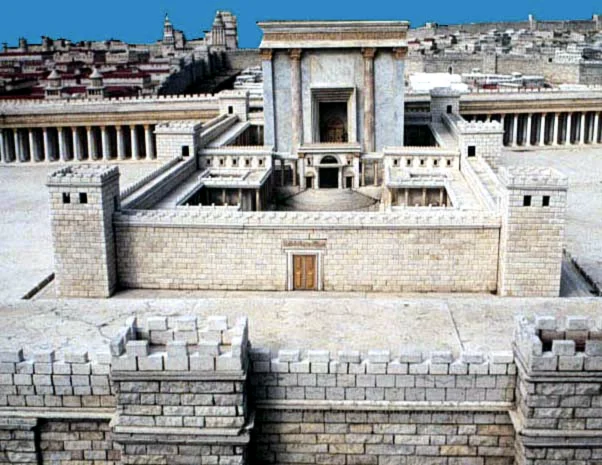
This is one incredible chapter. If you've got a red-letter edition Bible, then your page probably contains very little black ink. Because this chapter is almost all the words of Jesus from beginning to end. He is sitting opposite the eastern walls of Jerusalem on the Mount of Olives, probably in one of His favorite spots, the Garden of Gethsemane. Back in January of 2008, I had the privilege to go to Israel and sit in that very garden, surrounded by ancient, gnarled olive trees that have been in that spot since the days of Jesus. Across the Kidron valley you can still see the walls of Jerusalem. What's missing is the Temple. In its place sits the Dome of the Rock, a Muslim mosque. But the scene is still breathtaking for any believer. And here sat Jesus with His disciples, enjoying the shade of the olive trees. The disciples want to continue a conversation Jesus had begun as they passed by the temple on their way out of the city. They had commented on the beautiful stones and buildings that made up the magnificent Temple Complex.

secondtemple.jpg

Rather than comment on the beauty of the buildings, Jesus surprises them by saying, "Do you see these great buildings? Not one stone will be left upon another which will not be torn down." This had to have come as a shock to the disciples. After all, this was the Temple, the dwelling place of God Himself, and Jesus is saying that it is going to be destroyed. It must have left the disciples dumbstruck, because it is not until they sit down to rest on the hillside across the valley that they are able to continue the conversation. They want to know when this is going to happen and what the signs will be that it is going to take place. Jesus then goes into a rather lengthy monologue regarding the future. He tells them about events that are going to be fulfilled in the not-to-distant future and those that will not take place until the end of the Tribulation, just prior to His second coming. The Temple would be destroyed in A.D. 70 and we saw the fulfillment of Jesus' prophecy when we stood at the base of the Temple mount and saw gigantic stones lying on the ground, the remains of the once-glorious Temple.

But as bad as the news about the Temple had to be for these men, the more devastating news had to do with them. Jesus tells them they are going to be delivered over to the courts, flogged in the synagogues, stand trial before governors and kings, be arrested, imprisoned, and hated. Now that had to make their day! So he tells them to "be on their guard" (Vs 9), to "take heed, keep on the alert," (Vs 33), to "be on the alert," (Vs 35), and to warn others to "be on the alert!! (Vs 37). These guys had no idea when any of these things was going to happen. And neither do we. Oh, we know that some of these things have already been fulfilled, but there is much that Jesus discusses that has yet to happen. And even as bad as things may appear to be right now, many of these things could be a long way off. And some of these things will only happen at the end of the Tribulation period, and we will have been long gone due to the rapture of the church at the beginning of the tribulation. So what are we supposed to take away from this? The same thing the disciples did. Be on the alert.

We are to remain in readiness. We are to be prepared for anything and everything. Paul tells us, "So then, let us not be like others, who are asleep, but let us be alert and self-controlled" (1 Thessalonians 5:6). He encourages us to "… pray in the Spirit on all occasions with all kinds of prayers and requests. With this in mind, be alert and always keep on praying for all the saints" (Ephesians 6:18). He reminds us to "be on guard. Stand true to what you believe. Be courageous. Be strong" (! Corinthians 16:13).

We've got to be ready. We've got to remain diligent and mindful of what is going on around us. Just like the disciples of Jesus' day. We are on a mission. We are soldiers in the army of God, and we must remain battle-ready at all times. Paul warned Timothy, "No soldier in active service entangles himself in the affairs of everyday life, so that he may please the one who enlisted him as a soldier" (2 Timothy 2:4). Are you ready? Are you on the alert? Or are you tangled up in the affairs of life? Let's constantly remind each other what Jesus said, "What I say to you I say to all, 'Be on the alert!'" (Vs 37).

Father, I want to be ready. I don't want to fall asleep on my post. I don't want to get distracted by the things of this world and lose sight of the war that you are waging all around me. You are at work, and I want to be ready to be used by You for whatever role You might have for me. So help me heed the call of Jesus to "Take heed, keep on the alert!" Amen

How's Your Love LIfe?

Mark 12

"The most important one," answered Jesus, "is this: ‘Hear, O Israel, the Lord our God, the Lord is one. Love the Lord your God with all your heart and with all your soul and with all your mind and with all your strength.' The second is this: ‘Love your neighbor as yourself.’ There is no commandment greater than these.'" – Vs 29-31

In this chapter we see Jesus in a number of discussions with the religious leaders of His day. It starts our with Jesus' stinging indictment on the people of Israel – faintly veiled in the form of a parable. But we know they got the message because verse 12 says, "they understood that He spoke the parable against them." So they went away only to return with a plan to trap Him through the use of a series of questions, each designed to expose Jesus as a fraud. One had to do with the unfair taxation of the Romans. Another had to do with the resurrection. A third had to do with which commandment was the greatest or most important. Each time they were trying to put Jesus in a predicament where any answer He gave would get Him in trouble. Jesus handles all their attempts at entrapment with ease, frustrating their plans and feeding their growing contempt for Him.

But the one exchange that stands out from them all is found in verses 28-34. Jesus has already been confronted by the Pharisees, the Herodians, and some Sadducees. Each group had their own "trick" questionfor Jesus answer. Now along comes a scribe. He is a member of a well-respected occupation, whose job it was to copy the law. But he was more than a mere copyist. By constant and careful copying of the Old Testament laws, he would have become an expert. In the New Testament period the scribes were learned teachers and authoritative leaders, who were drawn from the priests and Levites, as well as the common people. Mark portrays them as high officials, advisors to the chief priests, and teachers of the Law. They were well-educated and well-informed in matters of the law.

So this guy comes up to Jesus and asks Him, "What commandment is the foremost of all?" It is impossible to know the intent behind this man's question. We assume he was trying to trick Jesus just like the others. But something leads me to believe he was looking for a legitimate answer to his question. Verse 28 says that he recognized that Jesus had answered the other questions well. So it seems that, as an expert on the law, he was anxious to see if Jesus could answer a question that had probably haunted him for all his professional life. Jesus' answer does not surprise him, because Jesus quotes directly from the Old Testament. Surprisingly, the scribe actually agrees with Jesus when he says, "Right, Teacher; You have truly stated…" (Vs 32). But there is something in the man's statement that is worthy of closer inspection. He requotes the very same passage from Deuteronomy 6:4-5, but makes an important addition.

The scribe said to Him, "Right, Teacher; You have truly stated that HE IS ONE, AND THERE IS NO ONE ELSE BESIDES HIM; AND TO LOVE HIM WITH ALL THE HEART AND WITH ALL THE UNDERSTANDING AND WITH ALL THE STRENGTH, AND TO LOVE ONE’S NEIGHBOR AS HIMSELF, is much more than all burnt offerings and sacrifices." – Vs 32-33

Do you see it? This expert on the law states that loving God and loving others is more important to God than an abundance of burnt offerings and sacrifices. Basically, he is saying that the intentions of the heart are more important than efforts of the flesh. Anyone can offer sacrifices and burnt offerings and be going through the motions. In Matthew 15:8, Jesus said this of the Pharisees, ""These people honor me with their lips, but their hearts are far from me." Love comes from the heart. Love for God and love for others is impossible without something happening in the heart. You can't fake love God or others. But you can certainly DO all the right things that make it appear as if you love God and others.  So we tend to concentrate on the outside, focusing of acts of sacrifice that are the result of self-effort more than they are a natural outflow of legitimate love for God and others.

So how's your love life?

Sounds kind of personal doesn't it? But love is personal. It's intimate. And it has to come from the heart for it to be real. But some of us have a hard time loving ourselves, let alone others. We have a hard time believing that God loves us, so we find it hard to love Him in return. We withhold love from others until they show love to us. But fortunately for us, God doesn't love that way. He just loves. And according to Jesus, the two greatest commandments He gave us are to love Him back, and to share His love with others. This journey we call the Christian life is not about rules, rituals, and religious creeds. It isn't about accomplishing things for God with our hands. It is about the heart. It is about love. It is about relationship. It is about loving because He has loved us. But it's hard to love others when you don't feel loved. It's impossible to love others when you can't even love yourself. But God does love you. He sent His Son to die for you. Not because you were lovely or lovable, but because love is the essence of God. And His undeserved, unmerited love for us is what motivates and empowers us to love Him in return and all those He brings into our lives.

We love, because He first loved us. If someone says, "I love God," and hates his brother, he is a liar; for the one who does not love his brother whom he has seen, cannot love God whom he has not seen. And this commandment we have from Him, that the one who loves God should love his brother also. – 1 John 4:19-21

It is interesting that after this exchange with the scribe, Mark records, "After that, no one would venture to ask Him any more questions" (Vs 34). Why do you think that is? I think Jesus had just nailed down the real issue going on with the religious leaders. It was their hearts. They didn't truly love God and they didn't love others. They had missed the point altogether and had made their lives nothing more than a list of religious rules and rituals to keep. But how easily we can fall prey to the same kind of mentality. But God calls us to a life of love.

Father, forgive me for not loving more. I confess that I often find it easier to offer you my sacrifice of self-effort and offerings of self-righteousness when all you are asking for is love. Love for You and love for my neighbor. May these two commandments truly become the greatest in my life. May I learn to be loved and love. May I extend to others the kind of love You have given to me. Sacrificially and selflessly. Amen

Faithfulness and Fruitlessness Don’t Mix.

Mark 11

May no one ever eat fruit from you again. – Vs 14

In reading through the book of Mark, you could almost reach the conclusion that he had some kind of Attention Deficit Disorder. Time after time he begins one story, then suddenly changes gears by beginning another story, only to return to the first story a few sentences later. Chapter 11 is no exception. It marks the beginning of Jesus' Triumphal Entry into the city of Jerusalem. He sends two of His disciples ahead to help prepare for His entrance. They are to locate a colt on which He will ride, in fulfillment of Zechariah's prophecy:

Rejoice greatly, daughter of Zion!

Shout, daughter of Jerusalem!

Look! Your king is coming to you:

he is legitimate and victorious,

humble and riding on a donkey—

on a young donkey, the foal of a female donkey. – Zechariah 9:9

Mark records that the two disciples found the young donkey and Jesus made His entrance into the city seated on it – with the cheers and shouts of the crowds filling the air. Jesus makes His way into the Temple, "and after looking around at everything, He left for Bethany with the twelve, since it was already late" (Vs 11). The next morning Jesus and His disciples make their way back to Jerusalem from Bethany. On their way, Jesus becomes hungry. Seeing a fig tree full of leaves, He takes a closer look to see if it had any fruit. Discovering the obviously healthy tree to be fruitless, Jesus curses it, saying, "May no one ever eat fruit from you again!" The only comment Mark makes regarding this event is, "And His disciples were listening." He doesn't say they were puzzled. He doesn't say they were concerned or confused. He simply says they were listening.

This is where Mark's A.D.D. seems to show up. He drops the fig tree story and picks back up with Jesus returning to the Temple. It's interesting that neither Luke or Matthew record the story of the cursing of the fig tree in their accounts. Instead, they give the story of the cleansing of the Temple more priority. But in his record of this passage, Mark deliberately sandwiches the two encounters with the fig tree in between Jesus’ cleansing of the temple. Why? What's the point?

Fruitlessness

I find that it is no coincidence that Jesus cursed the barren fig tree, then made His way to the Temple, where He violently threw out those who were buying and selling, and exchanging money. Jesus' anger was over the fact that this was all being done for profit by the religious authorities. They were in charge of this whole affair, and were lining their pockets with the profit. They had taken the courtyard reserved for Gentile worshipers and turned it into a Super Walmart. You could exchange your currency for the official Temple currency (for an exhorbitant fee). You could have your lamb examined by the priests, only to be told it was unfit for sacrifice. But you were in luck, because you could buy a replacement lamb right there (for an inflated price). In fact, you could buy doves or any other sacrificial animals right there in the courtyard of the Gentiles. And all the while, the religious leaders were making a killing off of the whole thing. That's why Jesus was so upset. They had turned a place of sacrifice, repentance and worship into a place of commerce. They were disguising their greed and sinfulness with a seeming act of righteousness.

“His disciples were listening.”

After cleansing the Temple, Jesus and His disciples return to Bethany for the evening. As they made their way back to Jerusalem in the morning, they encountered the fig tree again, but this time it was withered and dead. In fact, Mark records that it was "withered from the roots up." Peter is the first to speak and points out the dead tree to Jesus. Obviously, Jesus had intended this all along as a teaching moment, revealing to His disciples something they desperately needed to know.

Looking for fruit

You might call this a living parable. Mark links the incident of the fig tree directly to the situation that had occurred on the Temple grounds. Jesus was using the fig tree as a lesson for His disciples. He had come to the fig tree looking for fruit, but found none. Instead He found only leaves. The tree was had every appearance of life, but lacked the very thing for which it existed: fruit. Mark records that it was not the season for figs, so why did Jesus curse it? Mark's point was that it was not the time for ripe figs, but with this variety of fig tree, there should have been small, unripened figs, because budding precedes leafing and small figs should appear before the leaves. But Jesus finds nothing but leaves. There were no buds, no small figs, and therefore no promise of future normal figs. So Jesus curses it. Why? Because the tree, while full of leaves and having all the appearance of being a healthy, fruit-bearing tree, would never produce fruit.

The message is pretty simple. The Jews of Jesus' day had all the appearance of being healthy and whole. They should be producing fruit. They kept the law, they observed the sacred days and sacrificial requirements. Yet something was missing: fruitfulness. They had the pretension of life, but not the substance of life. They looked good on the outside, but lacked internal faith and external fruit.

This people honors me with their lips, but their heart is far from me. They worship me in vain, teaching as doctrine the commandments of men. – Mark 7:6-7

Have faith in God

When Peter pointed out the withered fig tree, Jesus simply said, "Have faith in God." What the disciples were going to experience in the coming days was going to require extreme faith. Faith in God, not in man, or in the religious system of their day. They were going to have to trust God. There were going to have to believe Him. To the point that they would be willing to ask Him for the unbelievable. Faith is the key to fruitfulness. They were going to have to trust and believe even in the midst of some very difficult days. But the result would be incredible fruitfulness. So how's your faith today? Are you trusting Him in spite of all that is going on around you? Or do you have all the appearances of spiritual health, but with no fruit to show for it? God is interested in fruit. Fruit is the byproduct of faith. Why not trust Him today? Place your faith in Him and watch Him produce fruit through you?

Father, I want to be fruitful. I don't want to look righteous, but lack the fruit that comes from a life of righteousness. I want my life to be fruitful because I am faith-full! I want to trust You more and me less. Forgive me for looking on the outside too much. For concentrating on appearances instead of the heart. Make me fruitful Father. Amen
The God Of Impossibilities.

Mark 10

With people it is impossible, but not with God; for all things are possible with God. – Vs 27

They say the key to good Bible study is context, context, context. In other words, if you want to understand a passage, you must look at it in its surrounding context. What do the verses aroundit say? What is the basic content or message of the story in which it is found? This verse from Mark 10 is a great example. We take a verse like this and, because of the tremendous nature of the promise it contains, we turn it into a panacea for all situations. And I am as guilty as anyone. How many times have I been in a difficult situation or been talking to someone who finds themselves going through a trying time, and I break out this verse. In the midst of my dilemma I find solace in reminding myself of God's incredible power. "All things are possible with God!" And that is true. The Bible clearly teaches it. Experience clearly proves it. But the problem is, this verse is talking about something altogether different. Let's look at the context:

The disciples were amazed at His words. But Jesus answered again and said to them, "Children, how hard it is to enter the kingdom of God!It is easier for a camel to go through the eye of a needle than for a rich man to enter the kingdom of God." They were even more astonished and said to Him, "Then who can be saved?" – Vs 24-26

You see, the context is dealing with salvation. Jesus has just had the encounter with the rich young man who had come to Him asking what he needed to do to "inherit eternal life" (Vs 17). The young man does not like Jesus' answer and walks away saddened. Because Jesus had told him to sell all he had and give to the poor. Jesus had basically told him to trade his earthly treasures for treasure in heaven. The young man couldn't do it. His love affair with his stuff was too great. Mark says, "he was one who owned much property." When the young man walks away, Jesus responds to His disciples, "How hard it will be for those who are wealthy to enter the kingdom of God!" (Vs 23). Again, the context is entrance into the kingdom. Jesus is talking about salvation. For the disciples this was a difficult statement because they had been raised to believe that a person's wealth was a sign of the blessings of God. The more someone had, the more they must have the favor of God. Which is why they were amazed at His words and asked, "Then who can be saved?" The basic thought behind their question seems to be, "If the rich are going to have a hard time getting into heaven, and they're blessed of God, then what hope do the rest of us have?" That's when Jesus responds with our verse for the day:

With people it is impossible, but not with God; for all things are possible with God.

It is impossible for anyone to enter the kingdom of God – whether rich or poor. For the rich it is seemingly harder because of their dependence upon and attachment to their wealth. But every individual has something in this life they are attached to that prevents them from following Christ and finding salvation. For the young man in the story, it was his attachment to his possessions. He was possessed by his possessions. So when Jesus said, "Follow me," he couldn't, and instead walked away sad. This young man had been trying to keep the law, and he was looking for anything else he might be leaving out that he needed to do to inherit eternal life. Jesus simply told him to give up everything of importance in his life in exchange for treasure in heaven, for salvation. To this young man, that was an impossible request. He just couldn't do it. But with God, all things are possible.

You see, this is really a promise regarding salvation and God's role in it. He is the one who saves. We cannot save ourselves. He is the one who redeems, we cannot redeem ourselves, no matter how rich we may be. When it comes to salvation, all of us have to walk away saddened, because it is impossible for us to save ourselves. But all things are possible with God. And those of us who have been redeemed from a life of slavery to sin are living proof of that fact.

For the rich young man, it was impossible for him to let go of all that he had become dependent upon for life, comfort, security, and a sense of self-worth. But God offers more. He offers something eternal and everlasting. I think it is interesting that earlier in this chapter Jesus had the discussion with His disciples regarding children. He told them

…the kingdom of God belongs to such as these. Truly I say to you, whoever does not receive the kingdom of God like a child will not enter it at all. – Vs 14-15

Childlike faith. Innocent. Dependent. Unquestioning. No baggage. No attachments. That is what Jesus was looking for from the young man. But instead He found a man who was bound by the things of this world. A man looking for ways to earn eternal life. He had come asking what he must do. Children in Jesus day had no rights, no real value or worth. They owned nothing. They had no power. Yet Jesus said the kingdom of God belongs to "such as these." The overlooked, the undervalued, the unimpressive, the weak, the despised, the foolish, …

…but God has chosen the foolish things of the world to shame the wise, and God has chosen the weak things of the world to shame the things which are strong, and the base things of the world and the despised God has chosen, the things that are not, so that He may nullify the things that are, so that no man may boast before God. But by His doing you are in Christ Jesus… – 1 Corinthians 1:27-30

All things are possible with God. He can and does save anyone He chooses. He can do what is impossible for man. He can save when man can't. And I am living proof of that promise. He saved me! He did what I never could have done. He had His Son pay a price I never could have paid. He did the impossible and the improbable. And He is still doing it today. So when I look around me and see individuals who are in need of His saving grace, I need to remind myself that with God, all things are possible. He can save anyone. Which means we should be sharing the gospel with everyone.

Father, you are the God of the impossible. That any of us are saved is testimony to that fact. I was like that rich young man, attached to the things of this world and unwilling to let go, but you did the impossible. You redeemed me. You brought me to an end of myself. You showed me that I could not earn your favor. Instead, you saved me and for that I am forever grateful. I didn't deserve it, but You did it anyway. Thank you, thank you, thank you!!! Amen

Flabby Faith.

Mark 9

I do believe. Help my unbelief. – Vs 24

Boy, can I ever relate to that statement. Especially right now when it seems that so much is going on around me. It seems that my faith is being tested daily by my circumstances and surroundings. And I believe. I really do. I believe God is there. I believe He is all powerful. I believe He is in control and fully aware of my situation. I believe what the Word of God says and have confidence in its promises for me. I believe Jesus loves Me and wants what is best for me.

But in spite of all my belief, I still seem to struggle with unbelief. It's really not an issue of a lack of belief or faith, but the quality of that faith. One translation renders verse 24 this way: "I have faith; make my feeble faith stronger" (BBE). Just like the man in the story, I have faith, but my faith or belief is weak. The Greek word used is apistia. It means "want of faith, unbelief, or weakness of faith." The "a" in front of the word is like or prefix "un." When the man says, "I believe," the Greek word used is pisteuo. It means "to think to be true, to be persuaded of, to credit, to place confidence in." This man did believe. Otherwise he would not have brought his demon-possessed son to the disciples for healing. Remember, Jesus and three of His disciples had been up on the mountain for His transfiguration. The rest had been left behind. When Jesus arrives on the scene there is a crowd gathered. This man had brought his son for healing, but had received none. Jesus' first response upon arrival was to say, "O unbelieving generation, how long shall I be with you? How long shall I put up with you? Bring Him to Me!" (vs 19).

The word Jesus uses to describe what He sees is "unbelieving." In the Greek it is the word apistos. There's that "a" prefix again. The word means faithless or unbelieving. Look familiar? It's the same basic word the father uses in the story. He had heard Jesus' statement and he includes himself in the crowd of those who are lacking in faith. He understands that he is part of an "unbelieving generation." He believes. He has faith. But it is of a weak variety. For all intense and purposes, it is non-existent. Because a faith that does not see results might as well be unfaith. It is a non-existent faith. So far this man's faith had gotten him nowhere. His son was still possessed. So he knows nothing more than to ask Jesus for help with his unbelief, his weak faith. And how does Jesus respond? He heals the man's son. What do you think this did for the man's faith? I think it was like a steriod shot or a double-shot of espresso. Watching Jesus work was a boost to this man's faith. But isn't that how it always works? We don't muster up more faith. We can't produce a greater degree of faith. We just have to take what little faith we have and bring it to Him. It is when we see Him work that our faith begins to grow. It is when we bring Him what little we have that we get the privilege of watching Him work, and we walk away with our faith increased. Isn't that the story behind the feeding of the 5,000? The disciples had weak faith. They wanted to send the people away. They could not see any way to feed that many people. So Jesus asks them to bring what they had. And they bring a paltry couples of loaves and fishes. But what happened next? Jesus turns a little into a lot. He performs a miracle. And each disciple walked away with a basketfull of leftovers. They carried away an armful of increased faith.

How's your belief today? You have it, but it is probably a little on the weak side. You have muscles, but some of them may be a little weak and flabby. Why? Because of disuse. They exist, but they're underused. The same is true of our faith. We have it, but we just don't use it. Why not bring it to Him today? Ask Him to help you with your unbelief, your "little" faith. If you do, you will walk away with increased faith, because He will act. He will do something to make your faith grow. He always does.

Father, help my unbelief. My faith is weak from under-use. I don't exercise it enough. I have it, but I am afraid to use it because I don't think it is strong enough to produce results. Which makes it all about me. But this isn't about me. It is about You. You are strong enough. You can do anything. No situation is too big for you. And no situation is limited to the size of my faith. You said I only needed to have faith the size of a mustard seed (Luke 17:6). That's pretty small. So Father, I bring my sometimes microscopic faith to you this morning and ask that you help me. Strengthen my faith by allowing me to see You work. Amen

Subtly Siding With Satan.

Mark 8

Get behind Me, Satan; for you are not setting your mind on God's interests, but man's. – Vs 33

Talk about harsh words! Jesus seems to body slam poor Peter in response to the impetuous disciple's reprimand of the Lord. Jesus has just finished telling His disciples that He was going to have to suffer and be rejected. Not only that, He would be killed and then raised to life three days later. This news didn't set well with the disciples, and especially Peter. So Peter did what Peter always did. He spoke up. Mark records, "And Peter took Him aside and began to rebuke Him" (Vs 32). What Jesus had just shared was unthinkable to Peter. Why? Because it didn't fit into his plans for the Messiah. It didn't gel with his view of how this whole thing was supposed to work out. Peter, like the other disciples, was looking for a conquering Messiah, not some kind of suffering servant. They had each signed up to be involved in a victory, not to follow some guy who was going to end up being littlemore than a victim. So Peter rebuked Jesus. And then Jesus returns the favor.

Get behind Me, Satan; for you are not setting your mind on God's interests, but man's.

Seems a bit harsh, doesn't it? After all, Peter meant well. Sure, he probably spoke a little too quickly and was a little bit out of line, but only because he cared. But Jesus knew what really motivated Peter's response. And it had more to do with Peter's own selfish interests than his concern for the kingdom or God's interests. Peter rebuked Jesus because he didn't like what he was hearing. He didn't want to hear talk of suffering and dying. Even if it did include being raised from the dead three days later. He wanted victory and he wanted it now. He also wanted to be a part of the celebration after the victory. It was what all the disciples were thinking. They were looking for power, prominence, and position. James and John would even ask Jesus for as much not long after this.

Permit one of us to sit at your right hand and the other at your left in your glory. – Mark 10:37

Jesus knew their hearts. He was fully aware of what was motivating Peter's response. And it wasn't pretty. In fact, Jesus compares Peter to Satan himself. Why? Because, like Satan, Peter was being motivated by pride and self-interest. At the moment he rebuked Jesus, Peter was revealing his true heart. He was in it for himself. He was more concerned about his own personal interests than he was the interests of God. Peter had an earthly agenda, not a heavenly one. He had plans for Jesus, but they didn't match God's plans. And when Jesus announced what God's plans were, Peter responded in anger.

Setting Your Mind On God's Interests

So what are God's interests? Clearly, God had an interest that His Son complete the work for which He had come. He had to finish the task He had been given. Jesus had to follow through with the divine plan for mankind's salvation. It was the same plan that Satan had tried to thwart in the Garden of Eden and in the Judean wilderness as he tempted Christ to abandon God's plan for some twisted plan of his own. So Jesus rebukes Peter. He then goes on to teach His disciples a valuable lesson.

If anyone wishes to come after Me, he must deny himself, and take up his cross and follow Me. For whoever wishes to save his life will lose it, but whoever loses his life for My sake and the gospel’s will save it. For what does it profit a man to gain the whole world, and forfeit his soul? – Mark 8:34-36

Deny yourself. Take up your cross. Follow Me. Lose your life. Give up your plan. Say goodbye to your agenda. Give up your lofty expectations. Die to self. Surrender to the Father's way of doing things. To not do so is to walk in harmony with the enemy. It is to side with Satan and his agenda. Because anything that is not in accordance with God's interests is in the enemy's interests. Jesus said, "He who is not with Me is against Me; and he who does not gather with Me, scatters" (Luke 11:23). So where do your interests lie? Do you know what God's interests are? Like Peter, have you confused them with your own? Do you tend to follow Jesus for what you can get out of it? Do you have some expectations that you want to get fulfilled? If Jesus told you they weren't going to happen, would you rebuke Him? Has He disappointed you at times by not doing things according to your plans? If so, then you're guilty of setting your mind on man's plan instead of God's. So why not deny yourself, take up your cross, and follow Him? He's never failed you yet.

Father, I want to set my mind on your plans and not my own. I don'twant to be guilty of the very same thing Satan was guilty of: Pridefully demanding that You follow my plan. My plans never work out. They never deliver what I think they are going to deliver. So help me deny myself, take up my cross and follow You. I want to live my life according to Your plan and not mine. Amen

Internals Vs Externals.

Mark 7

This chapter records yet another confrontation between Jesus and the Pharisees. And it reveals just what the real issue was behind their ongoing conflict. Jesus matter-of-factly states that it was a matter of externals versus internals. The outside versus the inside. Religion versus relationship. Behavior modification versus heart transformation.

The Pharisees confront Jesus about His disciples' failure to "walk according the the tradition of the elders" (Vs 5). It seems that, according to the Pharisees and Scribes, the disciples were eating their bread with "impure hands" Now, this wasn't about proper hygiene and the Pharisees' concern for the disciples' health and well-being. It was all about rules and conduct. It was about following a bunch of man-made regulations regarding ceremonial cleansing. This wasn't about keeping God's Law, it was about breaking the commandments of men. And Jesus would have nothing to do with it. So He slams the Pharisees and exposes them for what they were: hypocrites. In fact, He calls them "experts at setting aside the commandments of God in order to keep your tradition" (Vs 9). These guys had turned legalism into a professional sport, and they were the league's superstars.

It's What's Inside That Counts

Jesus makes it very clear. This is an internal issue, not an external one. It is not all about external rule-keeping and ceremonial cleansing. It is about the condition of the heart. He says, "the things which proceed out of the man are what defile the man" (Vs 15). He even makes it more clear for the disciples when He says, "For from within, out of the heart of men, proceed the evil thoughts, fornications, thefts, murders, adulteries, deeds of coveting and wickedness, as well as deceit, sensuality, envy, slander, pride and foolishness. All these evil things proceed from within and defile the man" (Vs 21-22).

Jesus was confronting a pervasive mindset that taught that external change was the key. Keeping a well-defined set of rules was what righteousness was all about. But instead, Jesus focuses attention on the heart. He makes it clear that the heart is where true cleansing must take place. Obsessing about external behavior and striving to keep up the appearance of righteousness is nothing less than hypocrisy. Because no amount of good deeds done, rules kept, or commands followed can change the condition of the heart. Which is why He called the Pharisees white-washed tombs, pristine on the outside, but full of decay on the inside. You may look good to those around you, but God knows what's inside.

"Be opened!"

At the end of this chapter, there is the story of Jesus healing the deaf mute. There is a phrase within this story that really caught my attention for the first time. It is in verse 34. It says that after put His ears in the man's ears, and then putting his own saliva on the man's tongue, Jesus looked up into heaven, then with a deep sigh said, "Be opened" What struck me is that Jesus sighed. Why? I think it was because he longed for the ears of all His listeners to be opened. Because in reality, they were all as deaf as the man who He was about to heal. Secondly, Jesus said, "Be opened!" He spoke in reference to the man's sense of hearing. That seemed to be the main focus of Jesus' healing. Sure, the man was given back his capacity for speech, but the ability to hear seemed to take precedence. It reminds me of what Jesus said back in Mark 4:23: "If anyone has ears to hear, let him hear."

Jesus longs for us to hear what He is saying. Not only when it comes to the gospel message, but in regards to heart change versus behavior modification. He wants us to hear that true change begins on the inside. He wants us to give up trying to change ourselves from the outside-in, and start allowing Him to work His process in reverse – from the inside-out. But how quickly we fall back into the trap of rule keeping, and with always the same results: disappointment and disillusionment.

So let's listen to what Jesus has to say. Not so we can go DO something about it, but so that we might focus on what He says is important: our hearts.

Father, forgive me for being fixated on the externals. Help me to see that your desire is for heart transformation. Open my ears to hear what you have to say regarding in internal dimension of my life. Continue your heart-transforming work in me. Amen

Hardened hearts. Dull Minds.

Mark 6

…and they were astonished, for they had not gained any insight from the incident of the loaves, but their heart was hardened. – Vs 52

They had not gained any insight. Basically, they had not put two and two together. They had witnessed an incredible miracle when Jesus fed the 5,000 with the loaves and fishes. But the disciples failed to make the connection between what they had seen and the one who had performed the miracle. Instead, Mark says "their heart was hardened." In the Greek the word translated "hardened" means "to cover with a thick skin, as a callous." Their hearts were unable to be penetrated by the significance of the events surrounding them. They could not see Him for who He was. Sure, they were astonished with the things they were seeing, but they could not connect the dots in their hearts, and realize the significance of the one they were following. Then they found themselves on a fishing boat in the middle of the Sea of Galilee, straining to get to the other side because of the winds. The next thing they know, Jesus is walking by on the water, intent on getting to the other side before they do. Rather than recognize Him, remember the events of the day, and marvel once again at the power of Jesus, they panic, jumping to the conclusion that they are seeing a ghost or some kind of sinister apparition. They were terrified.

Jesus gets in the boat with them, the wind stops, and they're astonished. They were blown away by what they had seen – Jesus walking on the water. But these are the same guys who had just watched Jesus feed thousands of people with just a handful of loaves and fishes. And they had each picked up a basket full of leftovers – 12 total! These are the same 12 that Jesus sent out and "gave them power and authority over all the demons and to heal diseases" (Luke 9:1). Mark says "they were casting out many demons and were anointing with oil many sick people and healing them" (Mark 6:13). But when it came to Jesus walking on the water, they were astonished. Because they had not gained any insight from the incident with the loaves. Their hearts were calloused and their understanding was dull.

But what had they missed? What was the message of the loaves and fishes that failed to connect with them? I see a number of them. First, that Jesus has the power to provide. He can meet any need – no matter how large or small. Whether it is physical hunger or spiritual thirst. Secondly, Jesus cares. His action was motivated by compassion. Mark records, "He felt compassion for them because they were like sheep without a shepherd" (Mark 6:34). He cared about their spiritual as well as their physical hunger. Thirdly, Jesus has power that is greater than the elements. He could multiply loaves and fishes. He could take a little and accomplish a lot. His power was limitless.

Yet the disciples kept trying to limit Jesus. They kept trying to put Him back into the box they had created for Him. They were comfortable with a Messiah of their own making. They wanted a revolutionary. They wanted a savior, but one of their own definition. They wanted salvation from Roman tyranny, not deliverance from sin. They wanted a warrior Messiah, not a suffering servant. They wanted a kingdom of this earth, not of heaven. So as they struggled with the oars, pulling against the wind and the waves of life, Jesus appears walking on the water. Their minds were occupied with the cares and concerns of this life. Like many of us, they were straining at the oars, trying to keep ahead of the waves and wind pushing against them. But Jesus walks on the water, unaffected by the elements, intent on His mission.

So how about us? Are our hearts calloused over from years of use loving the wrong things? Are our minds dulled by a steady diet of wrong expectations and faulty conclusions about God and His role in our lives? Are we easily astonished when we get a glimpse of Jesus in our lives that does not fit our preconceived notions of who He is? If so, then we are missing the point. We're not putting two and two together. You see, Jesus outside of our boat walking on the water is a reminder to us that He is who He says He is: The Son of God. But we want Jesus in our boat. We want Him doing things our way. We want Him concerned with our problems and helping us out of our jams. But Jesus is a man on a mission. He has a goal and an objective – as much today as He did then. Yet we want to limit His work to our own little world. For Jesus, walking on the water was an expeditious way of getting where He needed to go, so He could do what He needed to do. It was not done for show or effect. Jesus fed the 5,000, not as some kind of mind-blowing miracle, but to give the disciples a glimpse into who He was. Everything Jesus did was for a reason. He had a purpose behind it. To teach, instruct, encourage, reveal, motivate, and prepare those whom He had called. The same is true today. But we run the risk of having hardened hearts and dulled minds. Look around you. Where is Jesus? Is He out of the boat or in it? Is He walking on the water, revealing His power and proving His deity? Do you see Him feeding the spiritually hungry by using "the least of these?" He is at work. He is still walking on the water. He is still making the most out of the least. He is still showing compassion on the many. He is still revealing who He is to those whom He has called.

Father, thank You for sending Your Son. But forgive me for having a hardened, callous heart sometimes that prevents me from seeing Him at work around me. Forgive me for failing to learn the lessons you are teaching me about Your Son. Soften my heart, open my eyes, help me to see who it is that I serve. Let me not be surprised by those walking-on-water moments that take place around me. May I grow in my understanding of who Jesus is and what He is doing in the world today. Amen

Demons, Disease, and Death.

Mark 5

Go home to your people and report to them what great things the Lord has done for you, and how He had mercy on you.– Vs 19

In this one chapter, Jesus makes a significant impact on the lives of a number of people. He casts the demons out of man. He raises a synagogue official's daughter from the dead. His power heals a woman who had been hemorrhaging for twelve years. The demon-possessed man had been living his life among the tombs, an outcast and hopeless of ever seeing anything change. The woman had been living with her disease for twelve long years, without hope because the physicians had unable to provide any relief. The little girl was completely without hope, having died while Jesus was on His way.

In what appears to be the span of a single day, Jesus encounters three different sources of pain and affliction that have been confronting mankind since the fall. Yet Jesus was more than a match for all three. He proved once again His power over the enemy, over sickness, and even death. Yet He did so with compassion. He showed love and concern for those whose lives He impacted. He showed them mercy. He showered them with grace. His actions towards them were an expression of His love for them. These were three unknown, unnamed individuals who He could have easily ignored and passed by on His mission to save the world. But instead He stopped and showed them love. He extended mercy. He expressed grace. And their lives would never be the same.

Report what great things the Lord has done for you!

The command Jesus gives in verse 19 to the man who now stood completely free of any demon possession is an unbelievable summary of what it means to share our testimony. It is not about what age we were when we walked the aisle, confessed our faith, prayed the sinner's prayer, or placed our faith in Christ. It is about what an encounter with Jesus Christ has done for us. How He has shown mercy on us. It is being able to say, "I once was held captive by the enemy, but now I am FREE!" It is being able to report, "I once was deathly sick, unable to find relief from the experts of this world, but now I am WHOLE!" It is being able to proclaim, "My child had been robbed of life, but now she is ALIVE!" And Jesus says, "Go tell someone!"

So what has Jesus done for you lately? How has He shown you mercy? Why not go tell someone?

Father, thank You that because of Your Son, I am alive, whole, and free! Forgive me for not telling others all that You have done for me. Thank You for your grace, compassion, and mercy. Thank You for sending Your Son as an expression of Your matchless love for me. Give me the boldness to tell others so that they might experience the same amazing love. Amen

In the Yoke.

Mark 4

He began to teach them again… – Vs 1

And He was teaching them many things… – Vs 2

And He was saying to them… – Vs 9, 21, 24

And He said to them… – Vs 13

And He was saying… – Vs 26

With many such parables He was speaking the word to them… – Vs 33

…but He was explaining everything privately to His own disciples. – Vs 34

Have you ever wondered what it would have been like to be one of Jesus' disciples? To have followed Him and been able to listen to His teaching? But it's interesting to compare what and how we teach to what Jesus taught. Chapter 4 of Mark gives a glimpse into what His style and content looked like. Throughout the chapter we see Him teaching about the kingdom of God; speaking in parables about different kinds of soils, lamps, and mustard seeds; and explaining the meaning behind all His parables to His disciples.

This was not the didactic-style teaching we are used to as western Americans. Jesus rarely stood up in a lecture hall behind a podium and gave lengthy talks, complete with handouts and PowerPoint presentations. Sure, He did the occasional Sermon on the Mount, but most of His teaching seemed to be after the crowds had gone and He had gathered with the twelve around the campfire at night or while walking along the road. In fact, He told His disciples that "To you has been given the mystery of the kingdom of God, but those who are outside get everything in parables" (Vs 11). Jesus took the time to explain to His followers the meanings behind the parables. He revealed to them the truth that had been hidden for generations. He spoke about a different kind of a kingdom than they had all come to long for and expect.

But He did it all through relationship. He spoke casually, not professionally. He wasn't divulging information or details to be memorized and later regurgitated on a test. He was sharing truth in the context of friendship. It is a perfect picture of the yoke visual Jesus gave in Matthew 11:28-30. He invites His followers to enter into the yoke with Him. He wants each and every one of us to enter into an intimate relationship with Him in which we walk side-by-side with Him, learning from Him, working alongside Him, watching Him, listening to His instruction, and becoming more like Him with each passing day. Jesus doesn't give us a lecture on how to plow with a yoke, then expect us to get in one and get to work. No, instead He invites us into His yoke alongside Him and we learn through experience. That is exactly how the disciples were learning. They were walking and working with Jesus, and watching Him minister and share. They were apprentices to the Master Himself. And that is how we are to learn. Yet we seem to prefer the lecture approach. We want to have someone tell us what we are supposed to know, then we will memorize it and attempt to apply it to our lives. But we leave out the relationship part. It becomes all about us. Jesus could have invited the twelve to a 3-week crash course on ministry, then sent them on their way, but He chose to teach through relationship. He lived with them, walked with them, ate with them, spoke with them, modeled for them, and revealed to them who He was and what His kingdom was all about.

What is Jesus teaching you today? Better yet, HOW is Jesus teaching you today? Is it through an intimate, daily relationship as you walk with Him? Are you learning from Him as you experience the difficulties of life together? Are you in the yoke with Him, doing His work in His way? Christianity is not about religion, doctrine, creeds, concepts, Bible knowledge, Scripture memory, or the gathering of information. It is about relationship. It is about followers of Christ who willingly place themselves in the yoke with Christ, so that they can learn from the Master Himself as they go about their daily lives. It is an intimate, shoulder-to-shoulder experience with Jesus as He teaches us, reveals to us, speaks to us, and models for us who He is and how we are to live the life He has called us to.

Are you in the yoke?

Father, give me the courage to get in the yoke today. To choose to give up my rights and my agenda so that I might work and learn alongside the only One who can teach me what I need to know. Forgive me for thinking that more knowledge could make me more Christlike, all the while leaving out the very thing that will transform me into the likeness of Your Son: Relationship. Give me ears to hear, and let me be close enough to Jesus so that I can hear Him when He speaks! Amen

Crowds, Critics, Family and Followers.

Mark 3

Wherever Jesus went He seemed to attract a diverse group of people, and nowhere is that more clear than in Mark 3. Along with the growing crowds of people flocking to catch this miracle-working rabbi in action, there was a regular retinue of religious leaders intent on eliminating what they saw was a threat to their position and power. Jesus even seemed to find himself regularly surrounded by people possessed by demons. Every time He turned around, there was one of them screaming, "You are the Son of God!" just before Jesus cast them out sent them packing. He also had a growing number of disciples following in His wake. Out of that group, He selected the twelve who would spend the next three years under His instruction and tutelage. Then there was His family. At one point Mark records that Jesus' mother and brothers show up and attempt to take Him back home because they think He has lost his mind.

For every person that followed Jesus, there was a different opinion as to who He was and what He had to offer. For the sick, He was the healer. To the Pharisees and Scribes, He was a blasphemer and a thorn in the side. To His family, He was a lunatic and an embarrassment. To the twelve, He was a rabbi and teacher. To the crowds, He was a source of entertainment and a distraction from the boredom of everyday life. To the demons, He was an enemy and a threat to their domain. But to all, He was a formidable figure who demanded a reaction. Jesus could not be ignored. He was bigger than life. He was powerful. He was intriguing and, to some, frustrating. He was shaking things up and rocking the proverbial boat of His day. Everywhere He went He attracted a crowd. Every time He spoke, He solicited a response. Every time He healed, He caused a scene. Every time He taught, He rocked somebody's world. And He's still doing the same today.

So what's your response to Jesus? Are you following Him, ignoring Him, petrified of Him, attracted to Him, irritated by Him, or oblivious to Him? The sad thing about Mark 3 is that the only one who acknowledged Jesus for who He really was ended up being a demon! He saw the reality of Jesus' identity and he couldn't help but acknowledge it. No confusion. No cover up. Just confession. Here was a demon testifying to the reality of who Jesus was and is. Why can't we do the same?

Father, I want to confess Your Son loudly and regularly. I want my reaction to be one of worship and recognition of His power and position as the Son of God. I don't want to be part of the crowd, looking for a what I can get out of it. I want to be a faithful follower who recognizes Jesus as the Son of God and my Savior – every day of my life. Open my eyes and let me see Jesus for who He really is. Amen

Let the Battle Begin.

Mark 2

It is not those who are healthy who need a physician, but those who are sick; I did not come to call the righteous, but sinners. – Vs 17

Chapter two records the beginning of Jesus' conflict with the religious leaders of His day. His ministry has just begun and the tension begins to build. Because of His "new" teaching with authority and His miracles, Jesus is attracting huge crowds and gaining in popularity, which is not sitting well with the religious leadership. Rather than listen to His message of hope and acknowledge the power behind His miracles, they accuse Him of blasphemy – charging Him with claiming to be God. Only God can forgive sins, yet here is Jesus telling the paralytic that his sins are forgiven (Vs 5-12). Jesus understands what they are thinking and so He heals the man to prove His authority and His divinity. But they refuse to see.

But they DO see Him eating with tax collectors and sinners. He not only ate with them, but He chose a tax collector as one of His followers. For the religious leaders, this was appalling. They could not fathom the idea of associating with people like this. In fact, they did everything they could to avoid contact with them. And here was Jesus sharing a meal with them. Do you see the conflict? Do you sense the tension? Jesus was a revolutionary. He came to rock the status quo of His day. He came to turn the religious world on its ear. He had a different message and a different methodology. Rather than separate Himself from sinners and sequester Himself in a protective religious cocoon, Jesus walked right into the middle of the mess that had become humanity. In doing so, Jesus gives us an example to follow.

Jesus came to save those who are in need. He came to heal the spiritually sick and to save sinners. The very people He was eating with were those who knew they could not keep the Law. They knew they were sinners. They were constantly reminded by the Pharisees of their failure to keep the Law. Not only were they unable to keep the commands of God, they couldn't keep the hundreds of rules and regulations the Pharisees had added to God's Law. They were overwhelmed by their own guilt and sinfulness, and they lacked hope.

The Great Invitation

In Matthew 11:28-30, Jesus makes a statement that has come to be known as "The Great Invitation." He says:

Come to Me, all who are weary and heavy-laden, and I will give you rest. Take My yoke upon you and learn from Me, for I am gentle and humble in heart, and you will find rest for your souls. For My yoke is easy and My burden is light.

Jesus invites all those who are weary and heavy-laden. Those who are worn out from trying to keep the Law and obey the rules of men. Those who are weighed down by the constant reminder and realization that they can't live righteous lives on their own. They are carrying around a burden of guilt and shame that is too much to bear. They are sinners and they know it, but they can't do anything about it. So Jesus offers them rest. He offers them relationship. He offers to His yoke in place of their burden. He invites them to step into a discipleship relationship with Him. These people knew what a yoke was and what it was for. It was an instrument used for farming. It involved work and effort. But here is Jesus inviting them to leave one source of burden and take up another. But His comes with rest. His comes with companionship – the realization that you will be in that yoke with the Savior Himself. You will be working alongside Him doing His work. You will be walking alongside Him, learning from Him.

Jesus is still calling sinners into a relationship with Him. He is still offering rest for our souls. He is still inviting us to get into the yoke with Him. He offershelp while the self-righteous religious elite offer only condemnation. He offers rest while the "righteous" offer an endless list of rules and regulations to keep. He offers relationship while religion offers a daily diet of guilt and shame. Jesus came to heal the sick. He came to save sinners. He came to give rest to the weary. Are you in the yoke? Are you finding rest for your soul? Have you experienced the healing touch of the Great Physician? His offer still stands.

Father, thank You for sending Your Son for me. Thank You for providing healing for my spiritual disease. Thank You providing Me with rest from the burden of sin and the heavy weight of trying to save myself. I am in the yoke with Him. I don't always like it. Sometimes I try to get out of the yoke and go back to my old way of life, trying to make myself righteous through self effort. But it always fails and leaves me tired, worn out and burdened down. Keep me in the yoke with Your Son. Help me lean on Him and learning from Him. And give me a heart for the sinners who surround me. Let me see them with your eyes and point them to the yoke. Amen

Words With Weight.

Mark 1

What is this? A new teaching with authority! – Vs 27

Mark records the ministry of Jesus and, unlike the other gospel writers, he leaves out His birth and any reference to His genealogical record. Instead Mark starts off with the baptism of Jesus, briefly touches on His temptation in the wilderness, and moves right into His preaching ministry. He records that Jesus came into Galilee, preaching the gospel of God, and saying, "The time is fulfilled, and the kingdom of God is at hand; repent and believe in the gospel" (Vs 15). Jesus was teaching, preaching, and healing. He was going into the synagogues and teaching. But His was a different kind of teaching. It was like nothing these people had ever heard before. Mark says those who heard Jesus were "amazed at His teaching" (Vs 22). Why? Because He taught as one who had authority. He didn't teach like the scribes, who merely quoted the writings of former scribes. Their authority or power was based on the sayings of men. Jesus came with a different kind of authority. He spoke with power and confidence.

The word Mark uses that is translated "authority" here is atypical Greek word that carries a lot more weight than any English word can convey. It literally means, "the power of authority (influence) and of right (privilege); the power of rule or government (the power of him whose will and commands must be submitted to by others and obeyed)." Jesus did not come rehashing the thoughts and principles of men, but the Word of God. What He said was viewed as a "new teaching" because these people had never heard anything like it before. It wasn't the same old thing they had heard for generations. It was a verbal wake-up call, announcing that the kingdom they had long been waiting for was close at hand. All the promises of their ancient writings were about to be fulfilled. That was the good news. The Messiah had arrived.

Jesus' words carried weight. They conveyed power. They demanded attention. They required action. When He said to Simon and Andrew, "Follow Me, and I will make you become fishers of men," they didn't delay, but immediately left their nets and followed Him. When He met James and John, He called them, and "they left their father Zebedee in the boat with the hired servants, and went away to follow Him" (Vs 20). When Jesus commanded the demon to come out of the man in verse 25, it had to obey. When He spoke the words, "Be cleansed" to the lepor in verse 41, "immediately the leprosy left him and he was cleansed" (Vs 41).

Jesus taught with authority. He spoke with power. His words were to be listened to and obeyed. He was not just another teacher. He was the Son of God. He had authority over sickness and disease. He had power over demonic forces. He had the divine right to speak authoritatively, expecting His words to be listened to and His commands to be obeyed. But then as now, men were more interested in what Jesus could do for them, than in what He expected of them. The crowds were attracted by His miracles than His message. They came to be healed, not to hear what He had to say. The crowds began to grow. His reputation spread. But His words fell on deaf ears. They were more than willing to take advantage of His power, but refused to "repent and believe in the gospel" (Vs 15). The Jews would ultimately refuse Him as their Messiah. They would reject His message of hope and salvation. They would kill the Messenger, but not the message.

A new teaching with authority. How much weight do the words of Jesus carry in my life? How authoritative is His teaching for me? Am I more interested in what He does for me than what He expects of me? Do His words only carry weight with me if they fit into my agenda or plan for me? Do I listen only as long as they say what I want them to say? The Jews were right. His words did have authority. They were powerful. They were impactful. Because Jesus was and is the Son of God. He has the right to speak into my life and demand a response. He has the authority to command obedience. But am I willing to obey?

Father, help me to listen to the words of Your Son, then give me the ability to obey. I know His words have power and authority over my life, but I tend to want to pick and choose which words I will obey. I even want to choose which of His words I will hear. But You haven't given me that choice. You told the disciples at His transfiguration, "This is My beloved Son, with whom I am well-pleased; listen to Him!" (Matthew 17:5). Give me ears to hear and a heart to obey all that He says. Amen